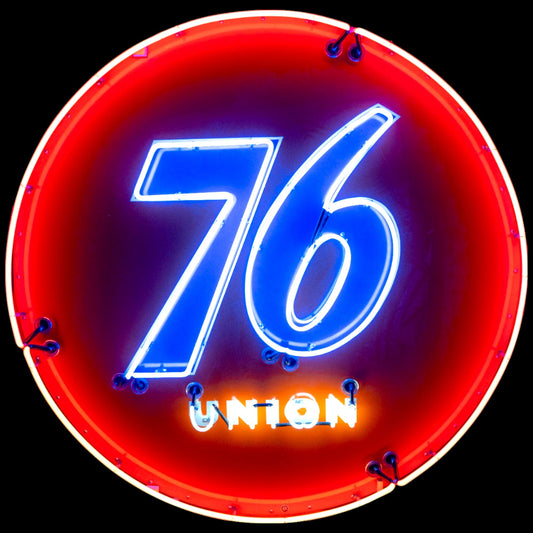
Few symbols in American petroliana are as recognizable as the bright orange “76” ball. From towering pole signs and porcelain pump plates to the small foam antenna balls that became pop-culture icons, Union 76 branding defined mid-century American service stations.
Collectors today search for original porcelain Union 76 signs, vintage neon displays, and authentic antenna balls because the brand represents a specific era of American road culture — when signage was built from heavy steel, fired in kilns, and designed to last decades outdoors.
This collection is dedicated to that legacy.

The 76 brand began under Union Oil Company of California (Unocal). The circular orange logo became nationally recognizable in the 1930s and evolved through multiple typography updates across the decades. Later ownership under Phillips 66 kept the brand alive, but the mid-century designs remain the most collectible.
Early Union 76 signage was manufactured using true porcelain enamel on steel — layered glass coatings kiln-fired onto heavy gauge metal. Neon installations were built with commercial steel cans and hand-bent glass tubing. These were not decorative pieces; they were commercial fixtures engineered for durability.
Today, original examples command significant premiums at auction depending on size, condition, and rarity.
High-demand 76 pieces typically include:
Condition, authenticity, and correct era typography significantly impact Collectability. Subtle logo variations — including font thickness and number spacing — help date pieces to specific production periods.
The market is saturated with thin aluminum signs and printed reproductions. Authentic mid-century porcelain signs differ in measurable ways:
Modern aluminum signs lack weight, depth, and firing character. Serious collectors can identify the difference immediately.
Our porcelain enamel signs follows traditional manufacturing methods — kiln-fired enamel on heavy steel — because that is how these signs were originally made.
The 76 antenna ball became a cultural icon during promotional campaigns in the 1960s and resurged in the 1990s. Authentic early examples were soft foam or rubber with molded seams and era-correct typography. Many later reissues exist, and condition dramatically affects value.
Even small pieces of branded memorabilia like antenna balls contribute to the broader Collectability of the 76 name.
Vintage gas and oil signage has shown long-term resilience, particularly strong brands with national recognition. Union 76 benefits from:
While condition and provenance always matter, the brand itself carries enduring demand among petroliana collectors.
Authentic originals are typically found at major advertising auctions, established petroliana dealers, and private collections. Online marketplaces require careful scrutiny due to widespread reproductions.
Look for heavy steel construction, kiln-fired enamel depth, age-consistent edge wear, and correct era typography. Aluminum substrates and printed graphics are modern reproductions.
Early original examples can carry collector value depending on condition and rarity. Later reissues are more common but still nostalgic display pieces.
Large porcelain rounds and original neon pole signs typically command the strongest demand.
Union 76 signage represents a defining chapter in American roadside history. Whether displayed in a garage, showroom, or dedicated petroliana collection, the orange 76 ball remains one of the most enduring symbols of the Golden Age of American service stations.
WHY CHOOSE US?
Each piece is handcrafted by skilled artisans, not mass-produced overseas. Quality like this doesn’t come off an assembly line.
You won’t find acrylic, stickers, or fake glow here. This is real neon—heavy, durable, and made to last a lifetime.
These neon cans aren’t for lighting up a dorm room—they’re made for guys who know the difference between real and replica.


I just want to say thank you. This isn’t a big company—just a small team doing everything we can to build something real.
No outside funding, no backup plan—just long nights, hard work, and hope. So when you place an order or share what we do, it’s not just another sale. It’s the reason we get to keep going. And that means more than I can ever explain.